
Aneurysm Coiling: Understanding the Risk of Recurrence
A brain aneurysm is a weakened area in a blood vessel wall that bulges outward due to pressure from blood flow. If an aneurysm ruptures, it can cause a life-threatening brain hemorrhage known as a subarachnoid hemorrhage (SAH), which requires immediate medical attention.
Fortunately, advancements in brain aneurysm treatment have made it possible to effectively treat many aneurysms using minimally invasive procedures such as aneurysm coiling. Also known as cerebral aneurysm coiling or endovascular coiling, this procedure has become one of the most preferred treatment options for both ruptured and unruptured aneurysms.
While aneurysm coiling provides excellent long-term protection against rupture, some patients may experience aneurysm recurrence. Understanding why recurrence occurs and the importance of regular follow-up can help ensure the best possible outcomes.
What Is Aneurysm Coiling?
Aneurysm coiling is a minimally invasive intracranial aneurysm treatment performed by an Interventional Neuroradiologist. During the procedure, a thin catheter is inserted through an artery in the wrist or groin and carefully navigated to the aneurysm inside the brain.
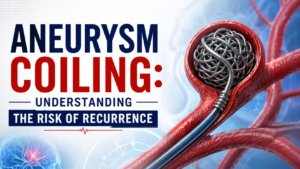
Tiny platinum coils are then placed within the aneurysm sac. These coils promote blood clot formation, effectively sealing the aneurysm from circulation and reducing the risk of rupture.
Benefits of Endovascular Coiling
- Minimally invasive procedure
- No open brain surgery required
- Shorter hospital stay
- Faster recovery
- Lower risk of complications in selected patients
- Effective treatment for ruptured and unruptured aneurysms
Because of these advantages, endovascular coiling has become a leading option for brain aneurysm treatment in Hyderabad and around the world.
Can an Aneurysm Recur After Coiling?
Although aneurysm coiling is highly successful, recurrence can occur in some patients. Recurrence refers to the reopening of a previously treated aneurysm, allowing blood to flow back into part of the aneurysm sac.
Most coiled aneurysms remain stable for years. However, a small percentage may demonstrate recurrence during routine follow-up imaging and occasionally require additional treatment.
Why Does Recurrence Happen?
Several factors can contribute to aneurysm recurrence after treatment.
Large Aneurysm Size
Larger aneurysms are often more challenging to completely occlude and may have a greater likelihood of recurrence.
Wide-Neck Aneurysms
Aneurysms with a broad neck can sometimes allow residual blood flow into the aneurysm despite successful coiling.
Coil Compaction
Over time, the coils may settle or compact, creating space for blood to re-enter the aneurysm.
Incomplete Initial Occlusion
If a small portion of the aneurysm remains untreated during the initial procedure, recurrence becomes more likely.
Patient-Specific Factors
Factors such as smoking, uncontrolled hypertension, vascular anatomy, and connective tissue disorders may increase the risk of aneurysm recurrence.
How Common Is Aneurysm Recurrence?
Studies suggest that approximately 10–20% of coiled aneurysms may show some degree of recurrence during long-term follow-up. However, only a small percentage of patients require retreatment.
Advancements in cerebral aneurysm coiling in Hyderabad, including stent-assisted coiling and flow-diverter stents, have significantly improved long-term durability and reduced recurrence rates.
Symptoms of Aneurysm Recurrence
Most recurrent aneurysms do not cause symptoms initially, making routine imaging surveillance extremely important.
In rare cases, patients may experience:
- Severe headaches
- Vision changes
- Double vision
- Facial numbness
- Neurological deficits
- Seizures
Any new neurological symptoms should be evaluated immediately by a specialist.
How Is Recurrence Detected?
Follow-up imaging plays a crucial role in monitoring the success of brain aneurysm treatment in Hyderabad.
Magnetic Resonance Angiography (MRA)
MRA is a non-invasive imaging technique that helps visualize blood vessels and detect any recurrence.
Computed Tomography Angiography (CTA)
CTA uses advanced CT imaging and contrast dye to evaluate cerebral blood vessels.
Digital Subtraction Angiography (DSA)
DSA remains the gold standard for assessing aneurysm recurrence and evaluating treatment durability.
Patients who undergo intracranial aneurysm treatment in Hyderabad are often advised to undergo periodic imaging based on their individual risk profile.
What Happens If an Aneurysm Recurs?
If recurrence is detected, several treatment options may be considered.
Repeat Aneurysm Coiling
Additional coils may be placed to achieve complete aneurysm occlusion.
Stent-Assisted Coiling
A specialized stent can support the coils and improve long-term stability.
Flow Diverter Stent Placement
Flow-diverting stents redirect blood flow away from the aneurysm, promoting natural healing of the blood vessel wall.
Microsurgical Clipping
In selected cases, surgical clipping may be recommended as an alternative treatment approach.
The choice of treatment depends on the aneurysm’s location, size, shape, and previous treatment history.
Advanced Brain Aneurysm Treatment in Hyderabad
Hyderabad has become a major center for advanced brain aneurysm treatment, offering state-of-the-art neurovascular care and cutting-edge endovascular technologies.
Patients can benefit from advanced procedures such as:
- Aneurysm Coiling
- Cerebral Aneurysm Coiling
- Endovascular Coiling
- Stent-Assisted Coiling
- Flow Diverter Placement
- Aneurysm Embolization
These minimally invasive treatments provide excellent outcomes while minimizing recovery time and surgical risks.
The Importance of Long-Term Follow-Up
Successful aneurysm treatment does not end after the procedure. Regular follow-up imaging allows specialists to detect recurrence early and intervene before complications occur.
Patients should:
- Attend scheduled follow-up appointments
- Control blood pressure
- Stop smoking
- Maintain healthy cholesterol levels
- Follow prescribed medications
- Adopt a healthy lifestyle
Long-term surveillance remains one of the most important factors in preventing future aneurysm-related complications.
Expert Care for Brain Aneurysms
Dr. Suresh Giragani is a renowned specialist in brain aneurysm treatment, aneurysm coiling, stroke intervention, and neurovascular disorders. With over 17 years of experience and more than 1,400 intracranial neurointerventions, he has successfully treated complex aneurysms using advanced endovascular techniques.
His areas of expertise include:
- Aneurysm Coiling
- Cerebral Aneurysm Coiling
- Flow Diverter Stent Placement
- Stroke Thrombectomy
- AVM Embolization
- Carotid Artery Stenting
- Neurovascular Interventions
Frequently Asked Questions (FAQs)
Is aneurysm coiling a permanent treatment?
Most aneurysms remain permanently treated after coiling. However, some may recur, making follow-up imaging essential.
What is the risk of recurrence after aneurysm coiling?
Approximately 10–20% of aneurysms may demonstrate some recurrence, though only a small percentage require additional treatment.
How often should I undergo follow-up imaging?
Most patients undergo imaging at 6 months, 1 year, and then periodically based on specialist recommendations.
Can a recurrent aneurysm rupture?
Yes. Significant recurrence can increase the risk of rupture, which is why regular follow-up is critical.
What is a flow-diverting stent?
A flow-diverting stent redirects blood flow away from the aneurysm, promoting healing of the vessel wall and eventual aneurysm closure.
Is aneurysm coiling safer than open surgery?
For many aneurysms, endovascular coiling offers a less invasive alternative with faster recovery and excellent outcomes.
Conclusion
Aneurysm coiling has transformed modern brain aneurysm treatment, offering a safe and effective minimally invasive option for patients with intracranial aneurysms. While recurrence remains a possibility in some cases, advances in cerebral aneurysm coiling, endovascular coiling in Hyderabad, and flow-diverting technologies have significantly improved long-term outcomes.
Regular imaging surveillance and expert neurovascular follow-up are essential to ensure continued protection against aneurysm recurrence. With timely diagnosis, advanced treatment, and ongoing care, patients can achieve excellent long-term results and improved quality of life.
About the Author:

Name: DR . SURESH GIRAGANI
INTERVENTIONAL RADIOLOGIST
DR. SURESH GIRAGANI CONSULTANT INTERVENTIONAL RADIOLOGIST at Apollo hospitals Jubilee Hills has more than Seventeen years of clinical experience in vascular interventions with a special interest in neurovascular and peripheral vascular disease interventional procedures.