
Non-surgical treatment for congenital vascular malformations and hemangioma — sclerotherapy and embolization, no open surgery.
Vascular malformations are abnormal clusters of blood vessels, present since birth, though they may not become apparent until later in life. They are categorised as slow-flow or fast-flow, referring to how rapidly blood moves through the lesion.
Superficial malformations present as swelling under the skin with bluish or greenish discolouration, sometimes causing bleeding or ulcers. Deeper malformations often cause pain, worsened by activity. High-flow malformations can cause pulsation, pain, ringing in the ears (if in the head), and severe bleeding if superficial.
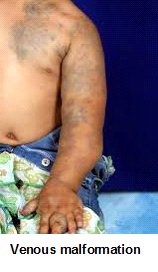
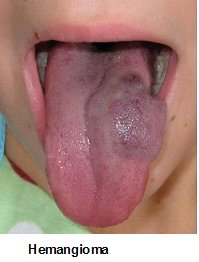
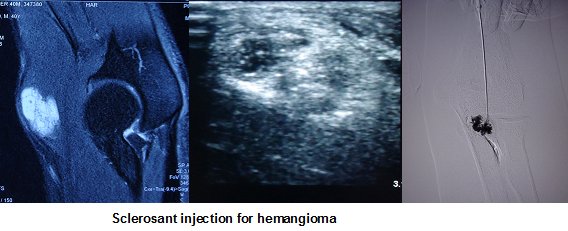
These lesions are difficult to treat by surgery alone. An interventional radiologist can treat them non-surgically — slow-flow venous malformations and lymphangiomas are treated by injecting a drug called a sclerosant under ultrasound guidance, which reduces the size of the malformation and helps shrink the lesion.
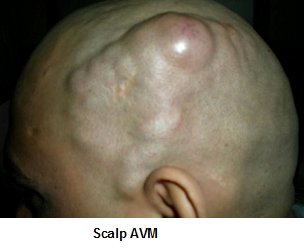
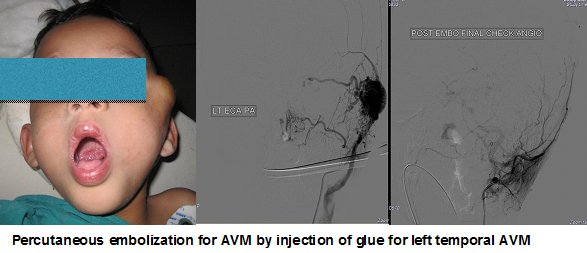
A vessel-blocking agent is injected into the malformation via micro-catheters.
Helps a surgeon remove the malformation with less complication and blood loss.
No skin cuts or sutures needed for the embolization itself.
Percutaneous glue embolization treats scalp AVMs directly.
Hemangiomas are benign growths made up of extra blood vessels, most commonly appearing in infancy. Unlike vascular malformations, which are structural abnormalities present from birth that don't typically regress, many hemangiomas grow rapidly in the first year of life before gradually shrinking on their own over several years.
A vascular malformation is an abnormal cluster of blood vessels, present since birth, though it may not become noticeable until later. They are classified as slow-flow (capillary, lymphatic, venous) or fast-flow (arteriovenous), based on how quickly blood moves through the lesion.
Vascular malformations are structural abnormalities present from birth that generally don't regress on their own. Hemangiomas are benign growths of extra blood vessels, usually appearing in infancy, that often grow for a period before shrinking naturally over several years.
Yes. Slow-flow lesions like venous malformations and lymphangiomas are treated with sclerotherapy (an injected sclerosant under ultrasound guidance). Fast-flow arteriovenous malformations are treated with endovascular embolization, both without open surgery.
Superficial lesions cause swelling with bluish or greenish skin discolouration, sometimes bleeding or ulcers. Deeper lesions cause pain, worse with activity. High-flow malformations can cause pulsation, pain, ringing in the ears if in the head, and significant bleeding if superficial.
It refers to how quickly blood flows through the lesion, and it determines treatment. Capillary, venous and lymphatic malformations are slow-flow and are treated with sclerotherapy. Arteriovenous malformations are fast-flow and are treated with embolization.
Sclerotherapy involves injecting a drug (sclerosant) directly into a slow-flow venous malformation or lymphangioma under ultrasound guidance, causing the lesion to shrink over time.
Embolization reduces the vascularity of the malformation, and can sometimes be curative for smaller lesions with accessible feeding vessels. For larger or complex AVMs, it is often used to help a surgeon remove the malformation more safely, with less blood loss.
Treatment is usually performed under local anaesthesia, without any skin cuts or sutures, so it is far less invasive than open surgery.
Most hemangiomas shrink on their own and need no treatment. Treatment with sclerotherapy or embolization is considered when the hemangioma is large, causing functional problems, or not resolving as expected.
At Neuro & Vascular, vascular malformations and hemangiomas are treated by Dr. Suresh Giragani, Consultant Interventional Radiologist at Apollo Hospitals, Jubilee Hills, Hyderabad, with over 18 years of experience.
Book a consultation with Dr. Giragani, or send your scans and reports for a specialist second opinion.