
TIPSS vs BRTO for Gastric Varices
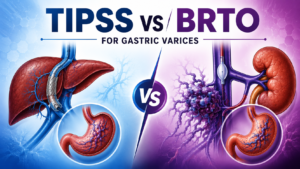
Gastric varices are enlarged veins that develop in the stomach due to increased pressure within the portal venous system, a condition known as portal hypertension. They are most commonly seen in patients with liver cirrhosis and can lead to life-threatening gastrointestinal bleeding if left untreated.
Advances in Interventional Radiology have transformed the management of gastric varices through minimally invasive procedures such as Transjugular Intrahepatic Portosystemic Shunt (TIPSS) and Balloon-Occluded Retrograde Transvenous Obliteration (BRTO). Both procedures are highly effective but serve different purposes depending on the patient’s anatomy, liver function, and underlying disease.
Understanding the differences between TIPSS and BRTO can help patients and Best Interventional radiologist in Hyderabad determine the most appropriate treatment strategy.
What Are Gastric Varices?
Gastric varices are dilated veins within the stomach that develop when blood flow through the liver becomes obstructed, causing portal hypertension.
Common causes include:
- Liver cirrhosis
- Portal vein thrombosis
- Chronic liver disease
- Splenic vein thrombosis
- Advanced portal hypertension
Although less common than esophageal varices, gastric varices are often associated with more severe bleeding episodes and higher mortality rates.
What Is TIPSS?
Transjugular Intrahepatic Portosystemic Shunt (TIPSS) is a minimally invasive image-guided procedure performed by an Interventional Radiologist.
During TIPSS Procedure in hyderabad a stent is placed within the liver to create a channel between the portal vein and hepatic vein. This allows blood to bypass the scarred liver and significantly reduces portal venous pressure.
Benefits of TIPSS
- Reduces portal hypertension
- Controls active variceal bleeding
- Prevents recurrent bleeding
- Helps manage refractory ascites
- Minimally invasive alternative to surgery
- Improves portal blood flow dynamics
TIPSS is particularly useful for patients with multiple complications of portal hypertension.
What Is BRTO?
Balloon-Occluded Retrograde Transvenous Obliteration (BRTO) is another minimally invasive procedure used specifically for gastric varices associated with a gastrorenal shunt.
During BRTO:
- A catheter is inserted through a vein
- A balloon temporarily blocks the gastrorenal shunt
- A sclerosant or embolic agent is injected
- The gastric varices are permanently obliterated
Unlike TIPSS, BRTO directly treats the varices without reducing portal pressure.
Benefits of BRTO
- Excellent control of gastric variceal bleeding
- Lower risk of hepatic encephalopathy
- Preserves liver blood flow
- Effective treatment for gastric varices with gastrorenal shunts
- May improve liver function in selected patients
TIPSS vs BRTO: Key Differences
Both TIPSS and BRTO are highly effective treatments, but they work through different mechanisms.
TIPSS addresses the underlying portal hypertension by creating a new pathway for blood flow. By reducing portal pressure, it decreases the risk of bleeding from both gastric and esophageal varices and can also help manage ascites.
BRTO, on the other hand, directly eliminates gastric varices by closing the abnormal shunt that supplies them. While it effectively controls gastric variceal bleeding, it does not reduce portal hypertension and may actually increase portal pressure in some patients.
Another important distinction is the risk of hepatic encephalopathy. Since TIPSS diverts blood away from the liver, some patients may develop encephalopathy after the procedure. BRTO generally carries a lower risk because it preserves normal liver blood flow.
When Is TIPSS Recommended?
TIPSS may be preferred in patients with:
- Severe portal hypertension
- Recurrent variceal bleeding
- Bleeding from both gastric and esophageal varices
- Refractory ascites
- Failure of endoscopic therapy
It is often considered when the goal is to reduce portal pressure and manage multiple complications of liver disease.
When Is BRTO Recommended?
BRTO is commonly recommended for patients with:
- Isolated gastric varices
- Gastrorenal shunts
- Previous episodes of hepatic encephalopathy
- Preserved liver function
- Contraindications to TIPSS
For selected patients, BRTO provides excellent bleeding control while preserving liver function.
Which Procedure Is More Cost-Effective?
The cost-effectiveness of TIPSS and BRTO depends on the patient’s condition and long-term outcomes.
TIPSS may offer broader benefits because it treats portal hypertension and related complications such as ascites. However, it may require ongoing monitoring for stent patency and hepatic encephalopathy.
BRTO often provides durable control of gastric varices with lower encephalopathy rates but may require additional surveillance because portal hypertension persists.
The most cost-effective option is the procedure best suited to the patient’s specific anatomy and clinical condition.
Can TIPSS and BRTO Be Combined?
Yes. In some complex cases, Interventional Radiologists may combine TIPSS and BRTO to achieve optimal control of portal hypertension and gastric variceal bleeding.
The decision is individualized based on:
- Severity of portal hypertension
- Liver function
- Presence of gastrorenal shunts
- Risk of encephalopathy
- Overall clinical status
Advanced Gastric Varices Treatment in Hyderabad
Patients seeking advanced treatment for gastric varices and portal hypertension can benefit from modern Interventional Radiology procedures available in Hyderabad.
Available treatments include:
- TIPSS Procedure
- BRTO Procedure
- Portal Vein Interventions
- Variceal Embolization
- Endovascular Management of Portal Hypertension
These minimally invasive procedures help reduce bleeding risk while avoiding major surgery.
Dr. Suresh Giragani specializes in advanced vascular and endovascular interventions, including:
- TIPSS (Transjugular Intrahepatic Portosystemic Shunt)
- BRTO (Balloon-Occluded Retrograde Transvenous Obliteration)
- Portal Hypertension Interventions
- Variceal Embolization
- Liver Vascular Procedures
- Neurovascular and Peripheral Vascular Interventions
Frequently Asked Questions (FAQs)
What is the main difference between TIPSS and BRTO?
TIPSS reduces portal pressure by creating a shunt within the liver, while BRTO directly obliterates gastric varices through an existing gastrorenal shunt.
Which procedure is better for gastric varices?
BRTO is often preferred for isolated gastric varices with a gastrorenal shunt, whereas TIPSS is beneficial when portal hypertension and its complications also require treatment.
Does TIPSS cure portal hypertension?
TIPSS does not cure portal hypertension but significantly reduces portal pressure and helps control its complications.
Which procedure has a lower risk of hepatic encephalopathy?
BRTO generally has a lower risk of hepatic encephalopathy because it preserves normal liver blood flow.
Can gastric varices recur after treatment?
Recurrence is possible after either procedure, although both provide excellent long-term bleeding control when combined with appropriate follow-up.
Are TIPSS and BRTO surgical procedures?
No. Both are minimally invasive catheter-based procedures performed by Interventional Radiologists without the need for open surgery.
Conclusion
Both TIPSS and BRTO are effective minimally invasive treatments for gastric varices, but their indications differ. BRTO is often the preferred treatment for isolated gastric varices with a gastrorenal shunt, as it directly obliterates the varices, preserves liver blood flow, and carries a lower risk of hepatic encephalopathy. TIPSS is particularly valuable when gastric varices are associated with esophageal varices, refractory ascites, or other complications of portal hypertension, as it reduces portal pressure and addresses multiple disease manifestations. The choice of treatment should be individualized based on the patient’s anatomy, liver function, and overall clinical condition.
About the Author:

Name: DR . SURESH GIRAGANI
INTERVENTIONAL RADIOLOGIST
DR. SURESH GIRAGANI CONSULTANT INTERVENTIONAL RADIOLOGIST at Apollo hospitals Jubilee Hills has more than Seventeen years of clinical experience in vascular interventions with a special interest in neurovascular and peripheral vascular disease interventional procedures.