
Cost Difference and Cost-Effectiveness Between Aneurysm Coiling and Flow Diverter Treatment
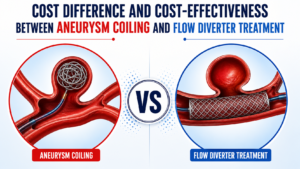
Brain aneurysms are potentially life-threatening vascular abnormalities that require timely treatment to prevent rupture and hemorrhagic stroke. Advances in Interventional Neuroradiology have introduced minimally invasive treatment options such as aneurysm coiling and flow diverter stent placement, both of which offer excellent outcomes for selected patients.
One of the most common questions patients ask is: Which treatment is more cost-effective—aneurysm coiling or flow diverter placement?
The answer depends on several factors, including aneurysm size, location, complexity, long-term outcomes, and the likelihood of requiring additional procedures.
For patients seeking brain aneurysm treatment in Hyderabad, understanding the cost difference between cerebral aneurysm coiling and flow diverter treatment can help in making an informed treatment decision. However, the most effective treatment is not always the one with the lowest initial cost but the one that provides the best long-term outcome.
Understanding Aneurysm Coiling
Aneurysm coiling, also known as endovascular coiling, involves placing tiny platinum coils inside the aneurysm sac through a catheter. The coils induce clot formation, preventing blood from entering the aneurysm.
Coiling is particularly effective for:
- Small to medium-sized aneurysms
- Narrow-neck aneurysms
- Ruptured aneurysms requiring urgent treatment
- Selected unruptured aneurysms
As a minimally invasive intracranial aneurysm treatment, aneurysm coiling has become one of the most commonly performed procedures for brain aneurysm treatment worldwide.
Understanding Flow Diverter Treatment
A flow diverter stent is a specialized device placed within the parent artery across the aneurysm neck. Instead of filling the aneurysm with coils, the device redirects blood flow away from the aneurysm, allowing the vessel wall to heal naturally over time.
Flow diverters are commonly used for:
- Large aneurysms
- Giant aneurysms
- Wide-neck aneurysms
- Complex aneurysms
- Previously treated recurrent aneurysms
Today, flow diverter treatment in Hyderabad is increasingly preferred for complex aneurysms because of its excellent long-term aneurysm occlusion rates.
Initial Treatment Cost: Coiling vs Flow Diverter
In many cases, the upfront cost of aneurysm coiling may appear lower than flow diverter treatment cost. However, actual expenses vary depending on:
- Number of coils required
- Need for stent-assisted coiling
- Aneurysm complexity
- Hospital stay duration
- Imaging requirements
- Procedure duration
- ICU requirements
For large or wide-neck aneurysms, multiple coils and additional stents may be required, increasing the overall treatment cost.
Flow diverter procedures may involve a higher device cost initially, but often require a single device and fewer adjunctive materials.
Long-Term Cost Effectiveness
When comparing aneurysm coiling vs flow diverter, it is important to consider long-term outcomes rather than only the initial procedure cost.
Coiling
While cerebral aneurysm coiling provides excellent immediate aneurysm occlusion, some aneurysms may recur over time due to:
- Coil compaction
- Incomplete occlusion
- Large aneurysm size
- Wide aneurysm neck
Recurrence may necessitate:
- Repeat angiograms
- Additional coiling procedures
- Further interventions
- Long-term imaging surveillance
These factors can increase overall healthcare costs over time.
Flow Diverter
Flow diverter stents often achieve durable aneurysm occlusion by reconstructing the parent artery itself.
Potential long-term advantages include:
- Lower recurrence rates
- Reduced need for retreatment
- Durable vessel healing
- Fewer repeat procedures
- Better long-term aneurysm exclusion
As a result, flow diverter treatment may be more cost-effective over the long term for selected complex aneurysms.
Which Treatment Provides Better Value?
The most cost-effective treatment is not necessarily the one with the lowest upfront cost but the one that offers the best long-term outcome with the fewest additional procedures.
Coiling May Be More Cost-Effective For:
- Small aneurysms
- Narrow-neck aneurysms
- Ruptured aneurysms
- Patients requiring immediate aneurysm exclusion
Flow Diverter May Be More Cost-Effective For:
- Large aneurysms
- Giant aneurysms
- Wide-neck aneurysms
- Complex aneurysms
- Recurrent aneurysms after coiling
In such cases, the higher initial investment in a flow diverter may be offset by lower recurrence and retreatment rates.
Factors Influencing Overall Treatment Cost
Several variables affect the final treatment cost:
- Aneurysm size and location
- Device requirements
- Hospital stay duration
- Intensive care requirements
- Follow-up imaging
- Need for additional procedures
- Patient-specific medical conditions
Therefore, treatment decisions should always be based on clinical suitability rather than cost alone.
Advanced Brain Aneurysm Treatment in Hyderabad
Patients seeking brain aneurysm treatment in Hyderabad have access to advanced neurovascular care and state-of-the-art treatment technologies.
Available treatment options include:
- Aneurysm Coiling
- Cerebral Aneurysm Coiling
- Endovascular Coiling
- Stent-Assisted Coiling
- Flow Diverter Stent Placement
- Balloon-Assisted Coiling
- Endovascular Aneurysm Embolization
These procedures are performed using advanced biplane angiography systems, ensuring precision, safety, and optimal patient outcomes.
The Importance of Individualized Treatment Planning
Every aneurysm is unique. The best treatment approach depends on:
- Aneurysm morphology
- Risk of rupture
- Patient age
- Overall health
- Previous treatments
- Long-term treatment goals
An experienced Interventional Neuroradiologist evaluates all these factors before recommending aneurysm coiling, flow diversion, or a combination of techniques.
About Dr. Suresh Giragan
Dr. Suresh Giragani specializes in advanced neurovascular interventions including:
- Aneurysm Coiling
- Flow Diverter Placement
- Stroke Thrombectomy
- AVM Embolization
- Carotid Artery Stenting
- Complex Neurovascular Interventions
With extensive experience in treating complex brain aneurysms, he provides personalized treatment plans designed to achieve the best clinical and economic outcomes for patients.
Frequently Asked Questions (FAQs)
Is a flow diverter more expensive than aneurysm coiling?
The initial flow diverter treatment cost is often higher than standard aneurysm coiling. However, long-term cost-effectiveness may be better in selected complex aneurysms due to lower recurrence rates.
Which treatment has a lower recurrence rate?
Flow diverter treatment generally demonstrates lower recurrence and retreatment rates for large and wide-neck aneurysms compared to conventional coiling.
Is coiling still considered an effective treatment?
Absolutely. Aneurysm coiling remains one of the most effective and widely performed procedures for ruptured and unruptured aneurysms.
Can flow diverters be used for all aneurysms?
No. Flow diverters are most suitable for specific aneurysm types, particularly large, giant, and wide-neck aneurysms.
Which treatment is better for ruptured aneurysms?
Endovascular coiling is often preferred for acutely ruptured aneurysms because it provides immediate aneurysm exclusion and protection from rebleeding.
Conclusion
Both aneurysm coiling and flow diverter treatment are highly effective options for managing brain aneurysms. While coiling may have a lower upfront cost in many cases, flow diverters can offer greater long-term cost-effectiveness for complex aneurysms by reducing recurrence and retreatment rates.
The ideal treatment should be selected based on aneurysm characteristics, clinical outcomes, and long-term benefits rather than initial cost alone. A comprehensive evaluation by an experienced neurointerventional radiologist in Hyderabad can help determine the most effective and economically sound treatment strategy for each patient.
About the Author:

Name: DR . SURESH GIRAGANI
INTERVENTIONAL RADIOLOGIST
DR. SURESH GIRAGANI CONSULTANT INTERVENTIONAL RADIOLOGIST at Apollo hospitals Jubilee Hills has more than Seventeen years of clinical experience in vascular interventions with a special interest in neurovascular and peripheral vascular disease interventional procedures.